Socket.IO Hosting Feature Overview
| Provider | Starting
Price | Storage
(GB) | Bandwidth | Free
Domain | |
|---|---|---|---|---|---|
![]() | $2.39 | 100-200 | Unlimited | Yes | Visit Hostinger |
![]() | $1.00 | 10-Unlimited | Unlimited | Yes | Visit IONOS |
![]() | $1.49 | 10-Unlimited | Unlimited | Yes | Visit HostArmada |
![]() | $4.00 | 20-4,000 | 5TB- Unlimited | No | Visit Kamatera |
![]() | $0.59 | 30-100 | Unlimited | Yes | Visit Verpex Hosting |
![]() | $4.00 | 30-50 | NA | NA | Visit VPSServer.com |
![]() | $3.79 | 50-450 | Unmetered | NA | Visit Bluehost |
![]() | $1.48 | 20-500 | 1000-10000 | NA | Visit Namecheap |
![]() | $5.99 | 40-200 | NA | NA | Visit GoDaddy |
![]() | $3.96 | 75-350 | NA | NA | Visit Contabo |
What Are Socket.IO Hosting Providers?
Socket.IO hosting providers are specialized services offering infrastructure and support for deploying and running real-time applications using the Socket.IO framework. They provide optimized environments tailored to Socket.IO’s requirements, ensuring seamless performance, security, and scalability for businesses relying on real-time communication, interactive features, or data streaming.
When to Choose and When to Avoid Socket.IO Hosting Providers
Reasons to Use Socket.IO Hosting Providers | Reasons Not to Use Socket.IO Hosting Providers |
| You operate applications that rely heavily on real-time data transfer or live updates (e.g., chat apps, collaboration tools). | Your platform does not require real-time communication features or push-based updates. |
| You need dedicated resources to handle potential spikes in concurrent connections. | You prefer simpler hosting options for non-real-time or static websites. |
| You handle sensitive user data or real-time transactions and require robust security. | You don’t have the budget to accommodate higher costs associated with specialized real-time hosting. |
| You want seamless integration with third-party APIs or services that enhance real-time functionality. | Your application is built on frameworks that are incompatible with Socket.IO or rely on different protocols. |
| You expect frequent traffic growth, requiring scalable hosting to support increasing connections. | Your Socket.IO usage is minimal and can be managed within basic shared hosting environments. |
If Socket.IO Hosting Providers Are Not Relevant, Consider These Alternatives
- Cloud Hosting: Ideal for businesses requiring flexible scaling, resource efficiency, and broader server control.
- Managed Hosting: Suitable for organizations needing hands-on technical support for various frameworks beyond real-time apps.
- Dedicated Servers: Best for companies requiring full control over resources for large-scale or high-traffic applications.
- Shared Hosting: Budget-friendly for small projects with limited real-time interaction needs.
How to Choose the Best Socket.IO Hosting Provider
- Assess Your Needs: Evaluate your real-time application usage, including concurrent connections, data throughput, and integration requirements.
- Scalability: Choose a provider that offers easy scaling to handle traffic spikes and user growth.
- Security Features: Look for advanced data protection, compliance certifications, and secure communication protocols.
- Support Quality: Ensure 24/7 customer support with expertise in Socket.IO and related technologies.
- Pricing Transparency: Compare plans to find a balance between real-time features and your budget.
- Performance Metrics: Focus on uptime guarantees (99.9% or higher) and low latency to maintain a smooth user experience.
11 Best Socket.IO Hosting Services in June 2026
-
Best Overall Hosting 2026
-
Users Top Choice 2026
-
Most Recommended NodeJS 2026
-
Best AI App Builder 2026
-
Top 5 Europe Web Hosting 2026

Hostinger provides a user-friendly platform with great value for developers looking to host their Socket.IO applications. They offer a range of hosting solutions, from shared hosting to cloud VPS, all with a focus on simplicity and speed. Hostinger is known for its performance and great uptime, making it a solid choice for smaller-scale applications or developers looking for an easy setup.
Rating Based on Expert Review:
- Overall Score: 4.7
- Features: 4.8
- Reliability: 4.7
- User-Friendly: 5.0
- Support: 4.7
- Pricing: 4.6
Detailed Analysis:
Features: Hostinger offers SSD storage, free SSL, and a simple way to install Node.js and Socket.IO applications on its cloud VPS and other hosting plans. With free CDN and high-speed servers, it offers excellent features to ensure your real-time app performs well.
Reliability: Hostinger promises 99.9% uptime, and its cloud infrastructure is designed to handle the demands of real-time applications. While uptime is solid, it’s not as high-end as some larger providers.
User-Friendly: Hostinger is perhaps one of the easiest platforms to use. With a straightforward interface and one-click installations for apps like Node.js, developers can quickly get their Socket.IO server up and running without hassle.
Support: Hostinger’s support team is available 24/7 via live chat and email. Their support is generally helpful, though response times can vary.
Pricing: Hostinger’s pricing is competitive and makes it a good choice for developers who need reliable hosting without spending too much.
Pros and Cons:
- User-friendly with easy setup
- Excellent value for money
- Good performance and uptime
- Limited advanced configurations for larger apps
- Support response time can be slower during peak hours
-
Best Value for Money 2026
-
Editor's Choice 2026
-
Most Recommened PHP Hosting 2026
-
Top 5 UK Web Hosting 2026
-
Top 5 Europe Web Hosting 2026

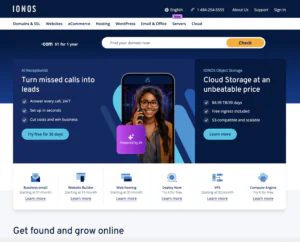
IONOS is a well-established hosting provider known for its scalable solutions. With a range of cloud hosting and VPS plans, IONOS offers a flexible platform for developers needing to host real-time applications like Socket.IO. While it may not be as specialized as some cloud providers, its infrastructure supports smooth scaling and high availability, which is essential for high-traffic apps.
Rating Based on Expert Review:
- Overall Score: 4.5
- Features: 4.6
- Reliability: 4.8
- User-Friendly: 4.5
- Support: 4.6
- Pricing: 4.4
Detailed Analysis:
Features: IONOS offers cloud hosting with flexible configurations, including managed and unmanaged options. For real-time apps, it supports scalable resources, SSD storage, and custom setups for high performance.
Reliability: IONOS offers strong uptime and reliability, with a 99.9% guarantee. Their cloud services are designed to offer solid performance for Socket.IO applications, ensuring minimal downtime and fast response times.
User-Friendly: While the platform is not as simple as some others, it provides all the tools you need for hosting applications. It’s geared more towards users with some technical experience, so there may be a bit of a learning curve.
Support: Support is available 24/7 via phone and chat. IONOS is known for responsive support teams that can assist with Socket.IO setup and maintenance.
Pricing: IONOS offers competitive pricing, particularly for users who need scalable resources. However, pricing can be higher for advanced features, so it’s essential to keep track of costs.
Pros and Cons:
- Flexible cloud hosting options
- Scalable and reliable performance
- 24/7 support
- More complex for beginners
- Higher pricing for advanced features
-
Best Web Hosting 2026
-
Top 5 Europe Web Hosting 2026
-
Top 5 Germany Web Hosting 2026
-
Top 10 Reseller Hosting 2026
-
Top 5 USA Web Hosting 2025

HostArmada provides cloud VPS and dedicated servers with strong security and high-speed connectivity, capable of hosting Socket.IO real-time applications. Their infrastructure ensures reliable uptime and smooth performance for chat apps and live dashboards.
Rating Overview
- Overall Score: 4.7
- Pricing: 4.5
- Features: 4.7
- Performance: 4.8
- Support: 4.7
- User Friendly: 4.6
Detailed Analysis
- Pricing: HostArmada’s plans are competitively priced for VPS and dedicated servers with low-latency networking.
- Features: Dedicated IPs, SSD storage, backups, security monitoring, and scalable resources.
- Performance: High-speed servers provide reliable performance for Socket.IO apps and real-time data exchange.
- Support: 24/7 support helps with server setup, Socket.IO deployment, and troubleshooting.
- User Friendly: Easy-to-use management dashboard enables efficient server administration.
- Dedicated IPs for real-time apps
- Secure and high-speed servers
- Scalable hosting resources
- 24/7 support
- Not pre-configured for Socket.IO
- Technical knowledge required
- Limited advanced real-time app templates
-
Best VPS Hosting 2026
-
Top 5 Europe Web Hosting 2026
-
Top 5 Australia Web Hosting 2026
-
Top 10 Best Gaming Hosting Provider 2026
-
Top 10 Reseller Hosting 2026

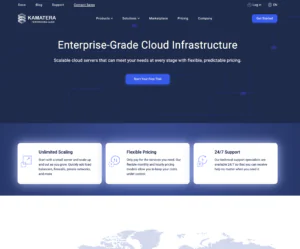
Kamatera offers flexible cloud infrastructure that allows users to scale resources as needed, making it an ideal choice for Socket.IO hosting. It provides many server options, from CPU types to block storage, with a strong focus on uptime and performance. With data centers located around the globe, it delivers high availability and low latency. Whether you’re building a simple application or scaling up for enterprise needs, Kamatera offers the solutions.
Rating Based on Expert Review:
- Overall Score: 4.8
- Features: 5.0
- Reliability: 5.0
- User-Friendly: 4.7
- Support: 4.9
- Pricing: 4.8
Detailed Analysis:
Features: Kamatera supports a variety of cloud configurations, including load balancers and firewalls, essential for running Socket.IO applications smoothly. Its custom cloud environment allows fine-grained control over server resources, giving you the flexibility to configure a high-performing setup for real-time communication.
Reliability: With a 99.95% uptime guarantee and multiple global data centers, Kamatera ensures reliability. Their cloud infrastructure is designed to avoid single points of failure, a critical feature when hosting real-time applications like Socket.IO.
User-Friendly: While Kamatera offers a powerful cloud platform, the interface may require a learning curve. However, for developers who need full control over their environment, it provides a good control panel to manage configurations.
Support: Kamatera offers 24/7 live support through various channels, ensuring you have assistance whenever needed. If you need help configuring your Socket.IO server, their support team is available to guide you.
Pricing: Kamatera operates on a pay-as-you-go model, allowing you to scale up or down based on your usage. While this can be more cost-effective, it can also be a challenge to predict costs if you’re not careful with your resource allocation.
Pros and Cons:
- Great flexibility with cloud configurations
- Multiple data centers globally
- Pay-as-you-go pricing structure
- Excellent customer support available 24/7
- The user interface may be challenging for beginners
- Pricing can be difficult to predict without careful monitoring
-
Best Reseller Hosting Provider 2026
-
Top 5 Australia Web Hosting 2026
-
Top 5 UK Web Hosting 2026
-
Top 10 Windows Hosting 2026
-
Top 10 VPS Hosting 2026

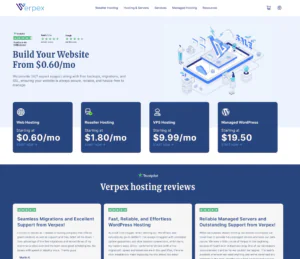
Verpex offers cloud VPS hosting with low-latency networking and dedicated IPs, making it suitable for real-time Socket.IO applications. Developers can deploy chat systems, dashboards, or live notifications reliably with Verpex infrastructure.
Rating Overview
- Overall Score: 4.8
- Pricing: 4.6
- Features: 4.8
- Performance: 4.9
- Support: 4.7
- User Friendly: 4.6
Detailed Analysis
- Pricing: Verpex plans provide high-performance VPS with dedicated resources suitable for real-time apps.
- Features: Dedicated IPs, SSD storage, automated backups, DDoS protection, and flexible server configuration.
- Performance: Low-latency network ensures smooth real-time communication and high reliability.
- Support: 24/7 support assists with deployment, configuration, and troubleshooting of Socket.IO applications.
- User Friendly: Control panel allows developers to manage and monitor servers efficiently.
- High-speed VPS with dedicated IPs
- Low-latency networking for real-time apps
- Scalable resources and backups
- 24/7 expert support
- Socket.IO apps require manual setup
- Limited pre-configured templates
- Technical knowledge needed for advanced setups

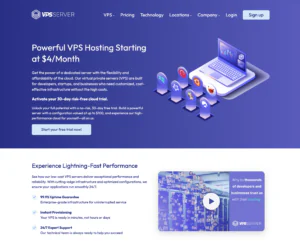
vpsserver is a practical choice for developers who need more control over real-time Socket.IO deployments. Since Socket.IO applications often require persistent connections, WebSocket support, and predictable server resources, a VPS-based setup can be a strong fit. vpsserver is best suited for developers, SaaS teams, chat platforms, dashboards, gaming tools, and collaboration apps that need configurable infrastructure rather than a basic shared hosting environment. Its value comes from giving users root-level flexibility, scalable resources, and the ability to fine-tune Node.js, reverse proxies, SSL, and process managers.
Rating Overview
- Overall Score: 4.6
- Performance: 4.7
- Support: 4.5
- Security: 4.6
- Pricing: 4.6
- Ease of Use: 4.5
Detailed Analysis
Performance: vpsserver is well suited for Socket.IO because VPS resources are more consistent than shared hosting. Users can configure Node.js, Nginx, PM2, and load balancing based on their traffic needs. Performance will depend heavily on server sizing and proper optimization.
Support: The platform is useful for technically comfortable users who can manage server environments. Support can help with infrastructure-level issues, but application-level Socket.IO configuration may require developer knowledge. Beginners may need extra setup guidance.
Security: A VPS gives users stronger control over firewall rules, SSH access, SSL certificates, and server hardening. This is valuable for real-time apps handling user sessions or live data. However, users are responsible for maintaining updates and secure configurations.
Pricing: vpsserver can offer good value for teams that need dedicated resources without moving to expensive enterprise infrastructure. Pricing is generally more flexible than managed application platforms. Costs may rise as traffic, bandwidth, and scaling needs increase.
Ease of Use: Developers familiar with Linux server management will find the setup manageable. Installing Node.js and configuring Socket.IO is straightforward with the right stack. Non-technical users may find it less beginner-friendly than managed hosting.
Pros and Cons
- Strong control over Node.js and Socket.IO configuration
- Good fit for real-time apps with persistent connections
- Scalable VPS resources for growing traffic
- Suitable for custom server stacks and reverse proxy setups
- Better isolation than shared hosting environments
- Requires technical server management knowledge
- Application-level support may be limited
- Security maintenance is mostly user-managed
-
Top 10 WordPress Hosting 2026
-
Top 10 Website Builder 2026
-
Over 99% Uptime 2023
-
Top 25 WordPress Hosting 2023

Bluehost is widely known for beginner-focused hosting, but Socket.IO applications require more technical consideration than standard websites. For small real-time features, prototypes, learning projects, or apps that combine a traditional website with Node.js functionality, Bluehost may be useful when the selected plan supports the required runtime and server access. It is better suited for users who value a familiar hosting dashboard and general support rather than advanced real-time infrastructure. For heavier Socket.IO workloads, users may need VPS or dedicated resources instead of entry-level shared hosting.
Rating Overview
- Overall Score: 4.3
- Performance: 4.2
- Support: 4.5
- Security: 4.4
- Pricing: 4.4
- Ease of Use: 4.6
Detailed Analysis
Performance: Bluehost can work for smaller Socket.IO use cases when deployed on a compatible VPS or advanced hosting plan. Shared hosting is usually not ideal for persistent WebSocket connections. Performance is best for lightweight real-time features rather than high-concurrency apps.
Support: Bluehost provides accessible support, which is helpful for users who are newer to hosting. However, Socket.IO-specific troubleshooting may go beyond standard hosting assistance. Developers should be prepared to manage Node.js and deployment details themselves.
Security: Bluehost includes common hosting security features such as SSL support and account-level protections. For Socket.IO apps, users still need to secure APIs, environment variables, ports, and server permissions. VPS users will have more control over advanced security settings.
Pricing: Bluehost is attractive for users who want affordable hosting to start a project. Entry-level plans may not be appropriate for full Socket.IO hosting, so users should compare higher-tier options carefully. Pricing remains reasonable for small business and prototype use cases.
Ease of Use: Bluehost’s dashboard is beginner-friendly and easier to navigate than unmanaged VPS platforms. This helps users who are combining websites, domains, email, and apps in one place. More advanced Socket.IO deployments may still require command-line work.
Pros and Cons
- Beginner-friendly dashboard and hosting experience
- Useful for small projects and basic real-time features
- Good general support availability
- Affordable starting options for early-stage websites
- Convenient domain and hosting management in one place
- Shared hosting is not ideal for Socket.IO apps
- Limited control compared with unmanaged VPS hosting
- Advanced real-time scaling may require higher-tier plans
-
Best Domain Registrar Provider 2026
-
Top 5 UK Web Hosting 2026
-
Great Support 2026
-
Excellent Service 2026
-
Over 99% Uptime 2026

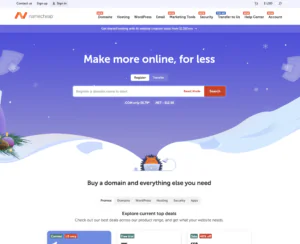
Namecheap can be a practical option for users who want affordable hosting while experimenting with Socket.IO applications. Although the company is best known for domains and budget hosting, its VPS options are more relevant for Socket.IO than basic shared hosting. Developers can use a VPS environment to install Node.js, configure WebSocket support, manage SSL, and run real-time applications such as chat systems, live alerts, collaborative tools, and notification services. Namecheap is a good match for budget-conscious developers who need flexibility without paying premium cloud prices.
Rating Overview
- Overall Score: 4.4
- Performance: 4.4
- Support: 4.3
- Security: 4.4
- Pricing: 4.7
- Ease of Use: 4.4
Detailed Analysis
Performance: Namecheap’s VPS hosting can support Socket.IO better than its shared hosting plans because users get more direct resource control. Performance is suitable for small to mid-sized real-time apps when configured correctly. High-traffic apps may require careful scaling and monitoring.
Support: Namecheap offers helpful general hosting support, especially for account, billing, domain, and server-access issues. Socket.IO deployment questions may require developer-side troubleshooting. Users comfortable with Node.js will get the most value from the platform.
Security: VPS users can configure SSL, firewalls, SSH keys, and software updates for stronger security. This is important for Socket.IO apps that transmit live user data. Security quality depends on how well the server is maintained after deployment.
Pricing: Pricing is one of Namecheap’s strongest advantages for this category. It can be cost-effective for developers building MVPs, side projects, and small business tools. Users should still account for any required management, backups, or scaling costs.
Ease of Use: Namecheap is relatively easy to start with, especially for users already managing domains there. VPS setup requires more technical skill than shared hosting, but the learning curve is manageable. Developers can deploy flexible stacks without excessive complexity.
Pros and Cons
- Budget-friendly option for Socket.IO VPS hosting
- Good for prototypes, MVPs, and small real-time apps
- Flexible enough for Node.js server configuration
- Convenient domain and DNS management
- Suitable for developers who want low startup costs
- Shared hosting is not suitable for most Socket.IO deployments
- Requires technical setup for Node.js and WebSocket handling
- May need upgrades for higher concurrency
-
Top 10 Windows Hosting 2022
-
Top Dedicated Hosting 2023

GoDaddy is a familiar hosting provider for users who want domains, websites, email, and hosting services from one platform. For Socket.IO hosting, its VPS or more advanced hosting options are generally more appropriate than basic shared plans because real-time applications need persistent server processes and WebSocket compatibility. GoDaddy can be a suitable choice for small businesses, agencies, and beginners who already use its ecosystem and want to add real-time features such as notifications, chat modules, or live dashboards. It offers convenience, though advanced developers may prefer more specialized cloud infrastructure.
Rating Overview
- Overall Score: 4.2
- Performance: 4.2
- Support: 4.4
- Security: 4.3
- Pricing: 4.1
- Ease of Use: 4.5
Detailed Analysis
Performance: GoDaddy can support basic Socket.IO applications when deployed on a VPS or compatible server environment. It is not the strongest choice for complex real-time systems with heavy concurrent traffic. Performance depends on plan selection, server resources, and configuration quality.
Support: GoDaddy’s support is accessible for general hosting, domain, and account-related concerns. Socket.IO-specific help may be limited because it involves custom Node.js application behavior. Users should have development knowledge or access to a technical team.
Security: GoDaddy provides standard hosting security options, including SSL availability and account protection tools. For Socket.IO apps, users must also secure server ports, APIs, user sessions, and dependencies. VPS users have more responsibility for ongoing security maintenance.
Pricing: GoDaddy can be convenient, but pricing may become less competitive once users move beyond basic hosting. Socket.IO hosting often requires VPS-level resources, which should be compared carefully. It is best for users who value convenience over the lowest possible cost.
Ease of Use: The platform is easy for beginners who already manage domains or websites through GoDaddy. Its interface helps simplify common hosting tasks. More technical deployment steps, such as configuring Node.js and process management, still require hands-on setup.
Pros and Cons
- Familiar platform for domains and hosting management
- Suitable for small real-time features on compatible plans
- Accessible support for general hosting needs
- Convenient for businesses already using GoDaddy services
- Beginner-friendly account and server management tools
- Basic shared hosting is not ideal for Socket.IO
- Pricing may be higher for suitable VPS resources
- Less specialized for advanced real-time application hosting
-
Top 5 Germany Web Hosting 2026
-
Top 10 VPS Hosting 2026
-
Top 10 Cloud Hosting 2026
-
Top 10 Dedicated Hosting 2026
-
Excellent Service 2026

Contabo is a strong option for Socket.IO hosting when users need generous server resources at competitive prices. Real-time applications often benefit from VPS environments that can handle persistent connections, background processes, Node.js runtimes, and custom networking configurations. Contabo is especially suitable for developers, startups, SaaS platforms, multiplayer tools, live dashboards, and chat-based applications that need more CPU, RAM, or storage without immediately moving to expensive cloud providers. Its value is strongest for technically capable users who can manage and optimize their own server environment.
Rating Overview
- Overall Score: 4.6
- Performance: 4.6
- Support: 4.3
- Security: 4.5
- Pricing: 4.8
- Ease of Use: 4.3
Detailed Analysis
Performance: Contabo offers resource-rich VPS plans that can be useful for Socket.IO applications with steady real-time traffic. Users can run Node.js, reverse proxies, databases, and process managers on the same server if resources allow. Performance depends on proper configuration and monitoring.
Support: Support is suitable for infrastructure-related issues, but users should not expect full application-level Socket.IO debugging. Developers with Linux and server administration experience will be more comfortable. Managed support needs may require additional services or external help.
Security: Contabo gives users enough control to implement strong security practices, including firewalls, SSH hardening, SSL, and regular updates. This is important for real-time apps that maintain active user sessions. The main limitation is that security management remains largely user responsibility.
Pricing: Pricing is one of Contabo’s biggest advantages in this category. Users can often access more server resources for the cost compared with many mainstream providers. This makes it attractive for growing apps, testing environments, and cost-sensitive production workloads.
Ease of Use: Contabo is more developer-oriented than beginner-oriented. Setup requires comfort with Linux, Node.js installation, server configuration, and deployment tools. Once configured, it provides a flexible environment for custom Socket.IO hosting.
Pros and Cons
- Generous VPS resources for the price
- Well suited for Node.js and Socket.IO deployments
- Good option for real-time apps with growing traffic
- Flexible server control for custom configurations
- Strong value for developers and startups
- Requires technical server administration skills
- Support is more infrastructure-focused than app-focused
- Beginners may need help with setup and maintenance
-
Top 25 Offshore Hosting 2026

Hosting.com provides managed hosting solutions capable of supporting real-time applications with Socket.IO. Their dedicated servers and VPS plans deliver stable connections, low latency, and reliable uptime, making it ideal for developers and businesses building chat apps, dashboards, or live feeds.
Rating Overview
- Overall Score: 4.7
- Pricing: 4.5
- Features: 4.8
- Performance: 4.8
- Support: 4.8
- User Friendly: 4.6
Detailed Analysis
- Pricing: Hosting.com offers competitively priced VPS and dedicated server plans suitable for real-time Socket.IO applications.
- Features: Managed servers, dedicated IPs, automated backups, monitoring, and scalable resources.
- Performance: High-speed connections and stable uptime ensure smooth real-time communication.
- Support: 24/7 in-house support assists with setup, configuration, and troubleshooting.
- User Friendly: Intuitive dashboards allow developers to deploy and manage Socket.IO applications efficiently.
- Managed hosting with dedicated servers
- Low-latency connections for real-time apps
- 24/7 support and monitoring
- Scalable resources
- Higher pricing than basic VPS
- Not pre-configured for Socket.IO, requires setup
- Limited physical data centers in some regions
Why Trust Our Recommendations
Our recommendations are based on extensive research and user feedback. By testing each hosting provider’s performance, support quality, and compatibility with Socket.IO applications, we ensure accurate and reliable evaluations. Our approach prioritizes transparency and user-centric analysis, helping you confidently select the best hosting provider for your needs.
How Do We Test and Rank Socket.IO Hosting Providers?
At HostAdvice, our methodology involves real-world testing and in-depth analysis of hosting providers. We purchase plans and assess them under typical business conditions to ensure reliability and performance. Key factors include uptime, speed, support quality, and pricing. Providers that offer transparent services and consistently meet Socket.IO application requirements earn higher rankings.
Socket.IO Hosting: Final Recommendations
Choosing the right Socket.IO hosting provider depends on your specific requirements, such as scalability, security, and budget. Consider your application’s performance needs and evaluate each provider’s support quality and features. By aligning these factors, you can ensure a reliable hosting solution that supports your business’s Socket.IO operations effectively.