Node.js MongoDB Hosting Providers Feature Overview
| Provider | Starting Price | Storage (GB) | CPU (Cores) | RAM (GB) | |
|---|---|---|---|---|---|
![]() | $4.24 | 50-400 | 1-8 | 4-32 | Visit Hostinger |
![]() | $4.00 | 20-4000 | 1-32 | 1-128 | Visit Kamatera |
![]() | $4.00 | 20-80 | 1-4 | 1-4 | Visit VPSServer.com |
![]() | $4.99 | 80-640 | 2-16 | 4-32 | Visit Hosting.com |
![]() | $3.99 | 30-100 | 1-4 | 1-6 | Visit Ultahost |
![]() | $2.00 | 10-640 | 1-12 | 1-24 | Visit IONOS |
![]() | $3.00 | 30-120 | 2-8 | 1-4 | Visit InterServer |
![]() | $4.99 | 50-500 | NA | 2-4 | Visit Verpex Hosting |
What are MongoDB Hosting Providers?
MongoDB hosting providers offer infrastructure and services optimized for running MongoDB databases. These providers handle the deployment, scaling, backups, and monitoring of MongoDB instances on cloud or dedicated servers. This hosting can include shared, VPS, or fully managed environments, depending on the technical needs of the user. Businesses and developers choose MongoDB hosting providers to ensure stable performance, data availability, and simplified management of their NoSQL databases, especially for applications that require high-speed read/write operations and flexible data models.
When to Choose and When to Avoid MongoDB Hosting
| Reasons to Use MongoDB Hosting | Reasons Not to Use MongoDB Hosting |
| You’re developing an application that handles large volumes of unstructured or semi-structured data. | You only need a simple relational database like MySQL or PostgreSQL. |
| Your app requires high-speed access to large datasets with dynamic schema changes. | You are unfamiliar with NoSQL and prefer SQL-based environments for better control. |
| You need horizontal scalability to manage growth and spikes in traffic. | You’re running a basic website or blog with no need for a dedicated database. |
| You want automated backups, monitoring, and easy scaling provided by a managed hosting service. | You prefer to self-host MongoDB on your own infrastructure to save cost. |
| Your application uses JSON-like documents that need flexible storage. | You don’t want to manage a database and only need a simple CMS or website builder. |
| You’re building microservices, real-time analytics, or IoT applications. | Your app has strict ACID transaction needs best met with traditional SQL databases. |
If MongoDB Hosting Is Not Relevant to Your Needs, Consider These Alternatives:
- Shared Hosting – Best for small websites or blogs that don’t require custom databases. Affordable and beginner-friendly.
- Managed MySQL Hosting – Suitable for apps that rely on structured data and require traditional SQL queries.
- Cloud SQL Services – Good for applications that need hosted relational databases with easy scalability.
- Document-Based CMS Platforms – Ideal for non-developers who want structured content without managing a database.
- Self-Hosted MongoDB on VPS – Offers more control if you’re comfortable managing servers and databases manually.
How To Choose The Best MongoDB Hosting Provider
- Determine Management Level: Choose between self-managed and fully managed MongoDB hosting based on your technical ability.
- Evaluate Performance Requirements: Consider RAM, storage type (SSD), and CPU specs based on your data volume and traffic.
- Look for Automated Features: Opt for providers offering automated backups, replication, scaling, and monitoring.
- Consider Security Standards: Ensure support for data encryption, firewall protection, and role-based access control.
- Review Support Options: Prefer providers with 24/7 technical support and documented resources.
- Compare Pricing and Plans: Ensure the plan includes what you need (e.g., backups, support, updates) at a price within your budget.
The Top 8 Best MongoDB Hosting Providers of June 2026
-
Best Overall Hosting 2026
-
Users Top Choice 2026
-
Most Recommended NodeJS 2026
-
Best AI App Builder 2026
-
Top 5 Europe Web Hosting 2026

Hostinger is known for its accessible hosting and beginner-friendly environment. While it doesn’t provide managed MongoDB hosting out of the box, its VPS plans are well-suited for custom MongoDB installations. With root access, you can install and manage MongoDB manually on Linux distributions.
Rating Based on Expert Review:
- Overall Score: 4.7
- Features: 4.7
- Reliability: 4.7
- User-Friendly: 4.9
- Support: 4.6
- Pricing: 4.8
Detailed Analysis:
Features All VPS plans include full root access, IPv6 support, SSD storage, and the option to choose your OS. It also offers weekly backups and a custom control panel for easy management.
Reliability Hostinger offers a 99.9% uptime guarantee and uses cloud-based VPS infrastructure with SSDs. While not as redundant as premium cloud platforms, it delivers consistent performance for lightweight and mid-tier MongoDB applications.
User-Friendly Hostinger’s VPS management dashboard is designed with simplicity in mind. It’s suitable for users who are setting up MongoDB for the first time and need some guidance.
Support Support is available 24/7 via live chat. Though they don’t offer MongoDB-specific management, the support team is helpful for basic configuration and system-level troubleshooting.
Pricing VPS plans start at $5.99/month, making Hostinger one of the more affordable MongoDB hosting options.
Pros & Cons
- Low-cost VPS plans
- Easy to set up for beginners
- Full root access for custom MongoDB installs
- Clear and intuitive dashboard
- No managed MongoDB support
- Performance limits for larger data sets
-
Best VPS Hosting 2026
-
Top 5 Europe Web Hosting 2026
-
Top 5 Australia Web Hosting 2026
-
Top 10 Best Gaming Hosting Provider 2026
-
Top 10 Reseller Hosting 2026

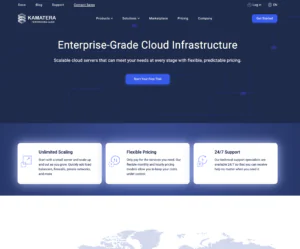
Kamatera offers customizable cloud environments, perfect for hosting MongoDB. You can configure servers with up to 104 vCPUs and 512GB RAM. Their hourly billing model means you only pay for what you use, which is useful when running MongoDB workloads with fluctuating demands. With Kamatera’s infrastructure, you can deploy MongoDB in minutes with full root access and complete control.
Rating Based on Expert Review:
- Overall Score: 4.9
- Features: 5.0
- Reliability: 5.0
- User-Friendly: 4.8
- Support: 4.9
- Pricing: 4.8
Detailed Analysis:
Features Kamatera supports a wide range of Linux distributions that MongoDB runs on. Users can create tailored environments with firewalls, load balancers, private networks, and backup services. The platform supports vertical scaling without downtime and includes API access for automation.
Reliability With data centers across four continents and a 99.95% uptime guarantee, Kamatera provides consistent performance for database workloads. The infrastructure is built for redundancy, reducing the risk of downtime.
User-Friendly While it caters to users who need more control, the interface is direct and functional. Kamatera also allows you to save configurations for rapid deployment across projects, useful for database developers and engineers.
Support Technical support is available 24/7. Though the service is largely self-managed, the team offers helpful guidance on configuration and deployment if needed.
Pricing Pricing starts at $4/month or by the hour for temporary setups. The flexibility makes it cost-effective for MongoDB environments that need scaling based on load or growth.
Pros & Cons
- Flexible server configurations
- Hourly billing options
- Global data center coverage
- Scales quickly for data-heavy applications
- Not designed for beginners
- Some features require manual configuration

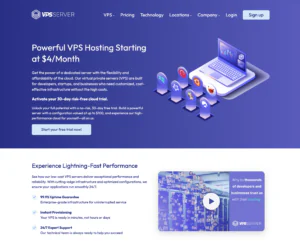
VPSServer.com is a strong fit for Node.js + MongoDB hosting when you want full control over your stack and the ability to size resources based on real workload needs. This setup is common for REST/GraphQL APIs, real-time dashboards, SaaS backends, and event-driven applications where Node handles concurrency well and MongoDB supports flexible document storage. VPSServer.com works best for developers and teams comfortable managing Linux servers, because reliability depends on proper configuration—process management for Node, secure MongoDB bindings, backups, and monitoring. The value is strongest when you need predictable performance and the freedom to optimize caching, indexing, and deployment workflows without being constrained by shared hosting limits.
Rating Overview
- Overall Score: 4.6
- Performance: 4.7
- Support: 4.4
- Security: 4.6
- Pricing: 4.7
- Ease of Use: 4.5
Detailed Analysis
Performance: VPSServer.com performs well for Node apps and MongoDB when you right-size CPU/RAM and use SSD storage effectively. It’s suitable for production workloads with steady traffic and can scale vertically as concurrency and query volume increase. Performance issues usually come from under-sized memory for MongoDB, missing indexes, or poorly managed Node processes under burst load.
Support: Support is reliable for provisioning, access recovery, and network issues that can disrupt uptime. It’s most effective for infrastructure-level troubleshooting rather than debugging your Node code or database queries. Teams that provide logs, error traces, and clear timelines generally get faster, more actionable outcomes.
Security: The VPS foundation supports strong security practices—SSH keys, firewall rules, and routine patching—while letting you lock down MongoDB to private interfaces. It’s important to enforce authentication, restrict ports, and use TLS where appropriate for database traffic. Security remains shared responsibility, so secrets handling and dependency updates in Node are just as critical as server hardening.
Pricing: Pricing is a standout advantage because you can run both Node and MongoDB on one well-sized instance for many projects. It stays cost-effective for MVPs and growing apps if you monitor usage and scale only when needed. Costs can rise if you split services across multiple nodes or need high RAM for larger datasets and caching.
Ease of Use: The control panel makes provisioning straightforward, and common Node deployment workflows (PM2, systemd, Docker) work well. Routine operations like resizing and rebuilds are simple if you automate deployment and backups. Beginners may face a learning curve with MongoDB tuning, journaling, and reliable backup strategies.
Pros and Cons
Strong performance for Node.js backends and MongoDB
Flexible scaling for growing traffic and database demands
Excellent value for running app and DB on one VPS
Works well with PM2, Docker, and CI deployment workflows
Solid security baseline with proper MongoDB lockdown
MongoDB memory sizing and indexing require careful tuning
Backups and monitoring are self-managed
High RAM needs can increase monthly costs
-
Top 25 Offshore Hosting 2026

Hosting.com provides specialized hosting optimized for Node.js applications with MongoDB support, making it ideal for developers and businesses building modern, high-performance web applications. Its infrastructure ensures fast execution, reliable database connectivity, and scalability, supporting both small projects and growing applications.
Rating Overview
- Overall Score: 4.7
- Pricing: 4.5
- Features: 4.8
- Performance: 4.9
- Support: 4.6
- User Friendly: 4.5
Detailed Analysis
- Pricing: Hosting.com offers competitive plans for Node.js and MongoDB hosting. While slightly higher than basic shared hosting, the pricing reflects optimized database performance and advanced developer features.
- Features: Full root access, SSD storage, automated backups, pre-installed Node.js and MongoDB, and support for multiple instances. Ideal for real-time applications, APIs, and web services.
- Performance: High-speed servers with low latency and consistent uptime. Optimized for concurrent database queries and fast Node.js execution, ensuring responsive applications.
- Support: 24/7 expert support via live chat, ticket, and phone. Assistance includes Node.js environment setup, MongoDB configuration, and troubleshooting for performance or database issues.
- User Friendly: Intuitive control panel with one-click installations and monitoring tools. Developers can quickly deploy apps while advanced users retain full flexibility over server and database configurations.
- Optimized for Node.js and MongoDB
- High-speed servers with low latency
- Full root access and scalable resources
- 24/7 expert support
- Slightly higher pricing than basic shared hosting
- Advanced configuration requires technical knowledge
- Some features may be excessive for small projects
-
Best Dedicated Hosting Provider 2026
-
Best Windows Hosting Provider 2026
-
Top 5 France Web Hosting 2026
-
Top 10 Website Builder 2026
-
Top 10 Web Hosting 2026

Ultahost specializes in managed hosting, including setups tailored for MongoDB. It offers fully managed VPS and dedicated servers with pre-configured environments for databases. For teams that don’t want to manage infrastructure, Ultahost handles setup, maintenance, and security, helping developers focus on data operations and scaling.
Rating Based on Expert Review:
- Overall Score: 4.8
- Features: 4.9
- Reliability: 4.9
- User-Friendly: 4.7
- Support: 4.9
- Pricing: 4.7
Detailed Analysis:
Features MongoDB support include automatic backups, root access, full SSH support, and optional cPanel. You can choose SSD or NVMe drives, which boost performance for read/write-heavy database applications. Custom OS images and firewall configurations are also available.
Reliability Ultahost promises 99.99% uptime and uses RAID-10 storage to safeguard data. Servers are hosted in Tier-3 and Tier-4 data centers, minimizing service interruptions.
User-Friendly The platform includes an easy-to-navigate control panel with database monitoring tools and one-click reboots. Managed support reduces the need for in-house admin knowledge.
Support Ultahost’s support team is available 24/7 via live chat, email, and ticket. They can help set up MongoDB, apply patches, and monitor server health as needed.
Pricing Plans start at around $5.50/month. Managed plans cost more but include technical assistance and monitoring, which may justify the pricing for non-technical users.
Pros & Cons
- Managed MongoDB hosting available
- High uptime and secure infrastructure
- Free migration and SSL
- Around-the-clock support
- Advanced users might find limited flexibility
- Higher prices for managed plans
-
Best Value for Money 2026
-
Editor's Choice 2026
-
Most Recommened PHP Hosting 2026
-
Top 5 UK Web Hosting 2026
-
Top 5 Europe Web Hosting 2026

IONOS offers low-cost VPS plans that are suitable for developers needing MongoDB hosting. While it’s a self-managed environment, the plans include key features like root access and scalable resources. It’s ideal for small projects or prototyping with MongoDB.
Rating Based on Expert Review:
- Overall Score: 4.5
- Features: 4.6
- Reliability: 4.5
- User-Friendly: 4.4
- Support: 4.5
- Pricing: 4.8
Detailed Analysis:
Features You get root access, dedicated resources, and a range of OS choices. IONOS also includes DDoS protection and optional backup solutions.
Reliability Backed by a 99.9% uptime SLA, IONOS maintains data centers in the US and Europe, offering good performance for localized applications.
User-Friendly The IONOS control panel is minimal and focused more on system-level management than user-friendly design, but it gets the job done.
Support While not MongoDB-specific, support is available 24/7. Live chat, phone, and email options are provided.
Pricing VPS plans start at just $2/month. This makes it one of the most affordable MongoDB hosting options on the market.
Pros & Cons
- Very affordable plans
- Dedicated resources
- Root access for full control
- Basic but effective support
- No managed MongoDB features
- Interface could be improved
-
Best Linux Hosting Provider 2026
-
Top 5 USA Web Hosting 2026
-
Top 10 Reseller Hosting 2026
-
Top 10 Windows Hosting 2026
-
Great Support 2026

InterServer’s Node.js MongoDB Hosting is engineered for developers seeking a reliable, high-performance environment to build and scale modern JavaScript-based applications. With solid support for Node.js and native MongoDB compatibility, this hosting setup is ideal for startups, development teams, and API-centric applications. InterServer provides full root access, flexible configuration options, and robust server performance, all backed by consistent uptime and resource allocation. It’s a solid value proposition for developers who want freedom without overspending on managed infrastructure.
Rating Overview:
- Overall Score: 4.5
- Performance: 4.6
- Support: 4.5
- Security: 4.4
- Pricing: 4.5
- Ease of Use: 4.4
Detailed Analysis:
Performance: InterServer provides SSD-powered servers and low-density configurations that support the performance demands of Node.js and MongoDB. Latency is minimal, and vertical scaling is straightforward for growing applications.
Support: While InterServer offers 24/7 support, response times can vary slightly depending on the complexity of developer-specific issues. However, their in-house support team is generally knowledgeable on Node.js stack deployments.
Security: Standard security features like DDoS protection and OS-level hardening are included, but advanced developer-focused security layers (like automated WAF rules for Node.js apps) may require manual implementation.
Pricing: The pricing is transparent with fixed monthly rates, which is great for budget-conscious developers. You get solid specs for the price, though value depends on how much you leverage the root access and customization capabilities.
Ease of Use: This is a developer-friendly platform, not necessarily beginner-focused. Users familiar with command-line operations and app deployments will find it efficient, while novices might face a steeper learning curve.
Pros and Cons:
Full root access and flexibility for advanced users
Native support for Node.js and MongoDB stacks
Transparent fixed pricing with no unexpected spikes
Strong performance consistency for backend-heavy apps
Not ideal for beginners without technical experience
Limited one-click app support for advanced frameworks
-
Best Reseller Hosting Provider 2026
-
Top 5 Australia Web Hosting 2026
-
Top 5 UK Web Hosting 2026
-
Top 10 Windows Hosting 2026
-
Top 10 VPS Hosting 2026

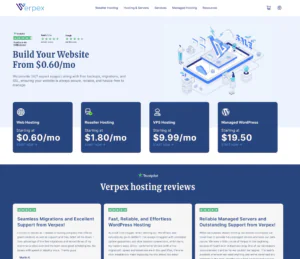
Verpex is a good option for Node.js + MongoDB hosting if you want a more approachable VPS experience and responsive support for common setup hurdles. It suits freelancers, small teams, and early-stage projects running APIs, dashboards, and lightweight SaaS backends that need steady uptime without complex infrastructure. Verpex tends to offer a smoother operational feel for users who prefer guidance on server basics, SSL, and deployment troubleshooting. It’s best for moderate workloads where you can run Node and MongoDB on a single instance and scale gradually, while high-growth or highly distributed architectures may eventually require more advanced orchestration.
Rating Overview
- Overall Score: 4.3
- Performance: 4.3
- Support: 4.5
- Security: 4.4
- Pricing: 4.2
- Ease of Use: 4.6
Detailed Analysis
Performance: Verpex can run Node apps and MongoDB reliably for moderate workloads when you choose a plan with enough RAM for MongoDB’s working set. It’s well-suited for steady traffic patterns and typical CRUD-based APIs. As datasets and concurrency grow, you may need tier upgrades and more careful indexing and caching to maintain consistent response times.
Support: Support is a key advantage, especially for onboarding, deployment blockers, and routine troubleshooting. This helps teams that want to get an API online quickly without spending hours on server setup. Deep performance tuning for MongoDB queries and Node profiling remains primarily self-managed.
Security: The environment supports solid security practices like SSH keys, firewall rules, and routine patching. It’s important to restrict MongoDB access to private interfaces and enforce authentication to prevent exposure. Application security—dependency updates, secret storage, and rate limiting—remains your responsibility.
Pricing: Pricing is fair for teams that value usability and support, but may be higher than no-frills VPS providers. It’s cost-effective for steady workloads where you keep the server lean and avoid unnecessary extras. If you need lots of RAM for MongoDB, higher tiers can become a bigger cost factor.
Ease of Use: The management experience is beginner-friendly, making deployment and routine admin straightforward. Common workflows like PM2, Docker, and reverse proxy setups are manageable with basic Linux skills. More advanced CI automation may require additional scripting beyond built-in tools.
Pros and Cons
Beginner-friendly experience for Node and MongoDB setups
Strong support for deployment and configuration issues
Reliable hosting for moderate API and SaaS workloads
Good fit for single-node app + DB architectures
Solid security baseline with proper database lockdown
Heavy MongoDB workloads may require higher tiers
Query optimization and backups are user-managed
Less ideal for complex, distributed architectures
Why Trust Our Recommendations
At HostAdvice, we prioritize accuracy and transparency in every review. Our team of experts combines hands-on experience with real-world testing and user feedback to evaluate MongoDB hosting providers. We assess each host’s performance, reliability, ease of use, and support quality. Our goal is to help users find the right hosting solution based on their actual needs—not marketing claims. Our comparison methodology is outlined below for those interested in how we rank each provider.
How Do We Test and Rank
At Hostadvice.com, We conduct in-depth testing by purchasing and using the same hosting plans offered to regular customers. This includes setting up MongoDB instances, evaluating uptime, measuring response times, and using real-time performance metrics. We examine each provider’s ability to handle scaling, backups, and customer support response quality. Our testing process is continuously updated to reflect changing standards in the hosting industry. Providers that meet or exceed their advertised promises receive higher scores.
Final Recommendations
MongoDB hosting is a practical choice for developers and businesses building data-heavy applications with dynamic schemas. It allows you to scale efficiently, handle real-time data, and avoid the limitations of traditional SQL databases. Whether you need a managed platform or prefer more control, choosing a MongoDB host that fits your technical needs and budget can significantly improve application performance and reliability.