LMS hosting services provide the server infrastructure needed to run a Learning Management System (LMS) like Moodle, Canvas, or LearnDash. These systems allow educators, businesses, and organizations to deliver and manage courses online. Hosting services ensure that the LMS is accessible, secure, and runs smoothly. LMS hosting can include features like one-click installations, automatic updates, SSL certificates, backups, and support for large databases. Some providers offer managed LMS hosting, handling the technical side, while others provide more control for users comfortable with server management.
When to Choose and When to Avoid LMS Hosting
Reasons to Use LMS Hosting
Reasons Not to Use LMS Hosting
You want to create and manage online courses for students or employees.
You only need basic website hosting with no learning functionality.
You require features like course progress tracking, user management, and quizzes.
You’re unfamiliar with LMS platforms and don’t plan to learn how they work.
You need a scalable solution that can handle hundreds or thousands of learners.
You’re building a simple blog, portfolio, or brochure-style site.
You want integration with tools like Zoom, Google Meet, or email notifications.
You have a very limited budget and don’t need the added functionality LMS platforms bring.
You need support for SCORM, Tin Can API, or other eLearning standards.
Your learning content is better suited for platforms like YouTube or Google Drive.
If LMS Hosting Is Not Relevant to Your Needs, Consider These Alternatives:
Shared Hosting: Suitable for basic websites like blogs, small business pages, or static content sites.
Wordpress Hosting: Ideal if you’re using a learning plugin like LearnPress or WP Courseware for smaller learning portals.
VPS Hosting: Offers more control and flexibility, suitable for developers who want to self-host an LMS with custom configurations.
Cloud Hosting: Good for projects with fluctuating traffic. It offers better scalability and redundancy.
Dedicated Servers: Best for high-traffic LMS platforms needing full control and powerful resources.
How To Choose The Best LMS Hosting Provider
Check LMS Compatibility: Make sure the host supports your preferred LMS (e.g., Moodle, Canvas, LearnPress).
Evaluate Performance Requirements: Look for good CPU, RAM, and bandwidth for smooth course delivery and video streaming.
Consider Managed vs. Unmanaged: Choose managed hosting if you want help with updates and maintenance.
Look for LMS-Specific Features: Tools like 1-click installs, staging environments, and SSL can make setup easier.
Assess Support Quality: LMS-related support or 24/7 general support can help with troubleshooting.
Scalability Options: Choose a provider that allows easy upgrades as your learner base grows.
Hostinger is a widely used hosting platform known for its simplicity and value. It offers a range of shared, VPS, and cloud hosting plans that are particularly well-suited for small to medium-sized LMS platforms like Moodle or LearnPress. Hostinger provides one-click installations, automated backups, and uptime for educational sites and training platforms.
Rating Based on Expert Review:
Overall Score: 4.7
Features: 4.6
Reliability: 4.7
User-Friendly: 4.8
Support: 4.7
Pricing: 4.8
Detailed Analysis:
Features: Hostinger supports LMS platforms through auto-installers like Softaculous and includes LiteSpeed Web Server, free SSL, SSD storage, and Cloudflare CDN integration. These tools help optimize performance and security for learning environments.
Reliability: Hostinger guarantees 99.9% uptime across its hosting solutions. With globally distributed data centers, it ensures fast load times and redundancy for learners logging in from different regions.
User-Friendly: Hostinger uses a custom dashboard that’s simpler than traditional cPanel, making it easier for new users to launch and manage their LMS. The guided setup for WordPress-based LMS plugins is helpful for non-technical users.
Support: Hostinger provides 24/7 live chat support and a large self-help knowledge base. While phone support isn’t offered, the chat team is quick to respond and familiar with popular LMS configurations.
Pricing: Hostinger’s pricing is very competitive, especially for those starting out. Shared hosting starts under $3/month, and even its VPS offerings remain budget-friendly, ideal for educators and trainers building their first online courses.
Pros & Cons
Pros
Affordable pricing across all hosting types
User-friendly dashboard with guided LMS setup
Global data centers for better access speed
One-click installation for popular LMS platforms
Cons
No phone support
Limited scalability for large-scale eLearning platforms
If you’re launching an online course or training portal and want a budget-friendly, easy-to-manage hosting solution, Hostinger is a solid choice. Start building your learning platform with Hostinger today.
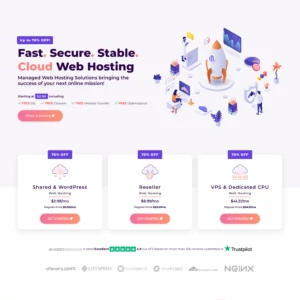
HostArmada is a cloud SSD hosting provider that emphasizes security and performance. It’s well-suited for LMS hosting thanks to features like daily backups, isolated accounts, and built-in security tools. Whether you’re running Moodle or an LMS plugin on WordPress, HostArmada offers the resources and support needed to create a stable and safe learning environment.
Rating Based on Expert Review:
Overall Score: 4.8
Features: 4.8
Reliability: 4.8
User-Friendly: 4.7
Support: 4.9
Pricing: 4.6
Detailed Analysis:
Features: HostArmada includes free SSL, web application firewall, malware scans, and automated backups. It supports PHP 7+, MySQL, and popular LMS platforms through one-click installations.
Reliability: The platform uses cloud SSD technology with multiple caching layers. It has a 99.9% uptime guarantee and load-balanced servers to maintain consistent performance even under peak usage.
User-Friendly: HostArmada’s control panel (cPanel) and one-click installers make LMS setup manageable, even for those with limited technical knowledge. The user dashboard is clean and simple to use.
Support: HostArmada’s support is one of its highlights. Available 24/7, their team is responsive and helpful, especially with technical configuration and performance optimization for LMS tools.
Pricing: Plans are slightly higher than budget hosts but still competitive. Pricing reflects the added value of security, support, and performance optimizations built in.
Pros & Cons
Pros
Strong emphasis on security and daily backups
Optimized for Moodle and other LMS tools
Fast and helpful customer support
SSD cloud infrastructure for speed and reliability
Cons
Prices increase on renewal
No free domain beyond the first year
HostArmada is ideal for educators and organizations that prioritize security and support in LMS hosting. With reliable infrastructure and easy management, it helps you deliver a seamless learning experience to your users. Launch your LMS on a secure foundation with HostArmada.
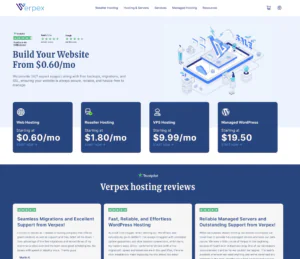
Verpex is a cloud web hosting company with a focus on user-centric services. It offers global data center locations, free daily backups, and free website migration, making it a good option for anyone looking to move an LMS to a more reliable environment. It works well with WordPress LMS plugins and self-hosted LMS software.
Rating Based on Expert Review:
Overall Score: 4.7
Features: 4.7
Reliability: 4.6
User-Friendly: 4.7
Support: 4.8
Pricing: 4.6
Detailed Analysis:
Features: Verpex offers automatic daily backups, SSL certificates, LiteSpeed servers, and support for a range of LMS tools. All plans come with free site migrations, even for multiple domains.
Reliability: Verpex provides 99.9% uptime, and its network spans over a dozen global locations. This is helpful for LMS platforms with international students or distributed users.
User-Friendly: The cPanel interface is familiar and easy to navigate. It also includes one-click installs for Moodle and other LMS platforms, making setup straightforward.
Support: Verpex has 24/7 technical support available via chat and email. They specialize in migrations and onboarding, which is useful for LMS platforms switching hosts.
Pricing: Verpex is competitively priced for shared and cloud hosting. There’s a slight increase on renewals, but the first term offers strong value with lots of features included.
Pros & Cons
Pros
Free migrations and daily backups
Global server locations for fast delivery
Easy LMS integration with auto-installers
Responsive support
Cons
Slightly limited storage on lower-tier plans
Fewer advanced developer tools for custom setups
Looking to host an LMS with minimal hassle? Verpex makes migration easy and offers a reliable setup for any eLearning platform. With global infrastructure and strong support, it’s a solid option for educators and trainers who want reliable LMS hosting from day one.
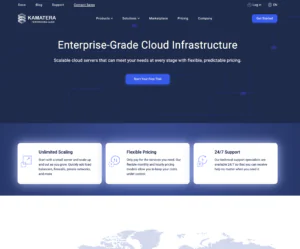
Kamatera is known for its high-performance cloud infrastructure that allows users to build custom server environments. It’s ideal for LMS hosting when you need specific configurations, high availability, or scaling options for large numbers of users. You can deploy a virtual machine tailored to your LMS platform’s needs in minutes.
Overall Score: 4.9
Rating Based on Expert Review:
Features: 5.0
Reliability: 5.0
User-Friendly: 4.8
Support: 4.9
Pricing: 4.9
Detailed Analysis:
Features: Kamatera offers full control over server configurations. Choose CPU, RAM, storage, OS, and install any LMS platform, including Moodle and Chamilo, on your own terms.
Reliability: The platform has data centers worldwide and offers a 99.95% uptime guarantee. Kamatera’s cloud network is built for redundancy and consistent performance.
User-Friendly: While it requires some technical skill, Kamatera offers an intuitive control panel for managing servers. Documentation is available to walk you through setting up your LMS manually.
Support: 24/7 support is available through chat, phone, and tickets. The team is responsive and helpful in handling custom server requests and LMS installation guidance.
Pricing: Kamatera uses a pay-as-you-go model. This allows educators and institutions to scale up or down based on demand without overpaying for unused resources.
Pros & Cons
Pros
Fully customizable virtual servers
Global network with low latency
Pay-per-use pricing with hourly billing
Scalable to handle large student bases
Cons
Not ideal for beginners
LMS installation must be handled manually
Kamatera is perfect for those building high-capacity or custom LMS platforms. Whether you’re running a large eLearning site or scaling courses for thousands of users, Kamatera gives you the tools and control to grow. Try it out and deploy your LMS on your terms.
ChemiCloud offers shared and cloud hosting services that are well-suited for lightweight to medium LMS use cases. With NVMe storage, free migrations, and performance-focused setups, it appeals to small schools, training programs, and solo educators launching new LMS platforms.
Rating Based on Expert Review:
Overall Score: 4.8
Features: 4.8
Reliability: 4.7
User-Friendly: 4.7
Support: 4.8
Pricing: 4.6
Detailed Analysis:
Features: ChemiCloud includes free SSL, LiteSpeed web servers, and NVMe storage on all plans. Softaculous enables quick installation of LMS platforms like Moodle and LearnDash.
Reliability: 99.99% uptime is advertised, with cloud redundancy to back it. Data centers in multiple continents ensure performance for global students.
User-Friendly: The interface is built around cPanel, and getting an LMS up and running is easy with clear onboarding and plugin installation guidance.
Support: Live chat, ticketing, and an active knowledge base are available 24/7. The team is helpful with both basic queries and LMS-specific setups.
Pricing: Hosting starts affordably, and even includes a free domain. However, prices increase significantly on renewal, so long-term budgeting is key.
Pros & Cons
Pros
NVMe storage for better LMS performance
Free domain and website migration
Easy LMS installation via Softaculous
Helpful, responsive support
Cons
Higher renewal rates
Limited server control for custom LMS setups
If you want to launch an LMS quickly and enjoy fast speeds and solid support, ChemiCloud offers a smooth path forward. With features like NVMe storage and free domain registration, it’s a good fit for new learning platforms that prioritize performance and simplicity.
FastComet is a hosting provider that emphasizes speed and value. It includes a suite of freebies such as domain transfer, daily backups, and advanced caching. LMS platforms benefit from its speed-optimized stack and CDN support. Ideal for those who want a quick, full-featured start.
Rating Based on Expert Review:
Overall Score: 4.7
Features: 4.7
Reliability: 4.6
User-Friendly: 4.7
Support: 4.8
Pricing: 4.6
Detailed Analysis:
Features: FastComet provides free SSL, daily backups, BitNinja security, and a built-in CDN. It supports popular LMS platforms with one-click installation.
Reliability: 99.9% uptime is backed by SSD cloud infrastructure across multiple continents. It’s designed to handle traffic spikes common during peak class times.
User-Friendly: FastComet’s dashboard is clean, and onboarding includes detailed steps to get your LMS ready fast. cPanel and Softaculous make setup simple.
Support: The support team is available 24/7 and well-versed in LMS hosting. Live chat and ticket systems are responsive.
Pricing: Starting prices are low, and features are generous, though you’ll see price increases on renewal. Good value for those who need speed and convenience.
Pros & Cons
Pros
Generous set of free tools
Free domain and site transfer
Optimized for speed with SSD and CDN
Great onboarding for LMS
Cons
Renewal pricing is noticeably higher
Some plans have limited storage
FastComet gets your LMS online fast with free migration, security tools, and speed-optimized hosting. It’s a great starting point for instructors and training providers who want reliable service with minimal setup time.
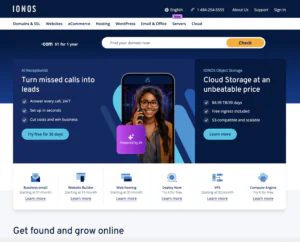
IONOS by 1&1 offers powerful infrastructure and managed services suitable for LMS deployments at scale. From VPS to dedicated hosting, it supports advanced setups and secure data handling, which is ideal for large educational institutions.
Rating Based on Expert Review:
Overall Score: 4.6
Features: 4.6
Reliability: 4.8
User-Friendly: 4.5
Support: 4.7
Pricing: 4.6
Detailed Analysis:
Features: IONOS offers DDoS protection, SSL, geo-redundant data centers, and scalable cloud resources. It supports both proprietary and open-source LMS solutions.
Reliability: Backed by German-engineered infrastructure and 99.99% uptime guarantees, IONOS is built for consistent performance and reliability.
User-Friendly: While more tailored to experienced users, the dashboard includes necessary tools for managing virtual machines and web apps. Their setup wizard helps with initial deployment.
Support: 24/7 support is available via phone and chat. IONOS also assigns a personal consultant to help with more technical needs.
Pricing: Pricing is fair for the level of customization offered, especially on VPS and cloud plans. Some entry plans start low, but more advanced setups add cost.
Pros & Cons
Pros
Enterprise-grade infrastructure
Personal consultant for every account
Suitable for large-scale LMS use
Secure and compliant data centers
Cons
Interface may be complex for beginners
Limited one-click installs for some LMS tools
IONOS offers a reliable, enterprise-ready platform for LMS hosting. If you need a secure and scalable solution for a large educational or training program, IONOS is ready to handle your demands with custom setups and personal support.
At HostAdvice, we focus on practical, data-backed evaluations. Our recommendations combine first-hand testing with real user feedback. We aim to simplify the decision-making process for those seeking LMS hosting services, whether you’re launching your first course or scaling up an eLearning platform. Our team compares dozens of providers based on usability, features, and long-term reliability.
How Do We Test and Rank
We conduct in-depth testing of LMS hosting providers by creating real accounts, installing platforms like Moodle, and measuring performance over time. Our process evaluates speed, uptime, ease of use, support responsiveness, and cost-effectiveness. We also monitor software update compatibility and assess scalability for growing eLearning platforms. We continue refining our methods to reflect the latest changes in the hosting market.
Final Recommendations
Choosing LMS hosting is a smart move if you’re planning to deliver structured online education or training. These services offer the infrastructure and features necessary to support interactive learning environments. Whether you need scalability, ease of use, or strong integration capabilities, the providers listed on this page offer different strengths to meet various needs.
What is the difference between LMS hosting and regular web hosting?
LMS hosting is optimized for running learning platforms and includes support for educational features, while regular web hosting is more generic and often lacks tools needed for managing online courses.
Can I install any LMS on these hosting plans?
Most LMS hosting providers support a wide range of platforms like Moodle, LearnDash, and Chamilo. Check with the provider to ensure compatibility with your chosen system.
Is managed LMS hosting better for beginners?
Yes. Managed hosting handles technical tasks like updates, backups, and server management, making it ideal for users without a technical background.
How much traffic can LMS hosting handle?
It depends on the provider and plan. Some plans can handle a few hundred users, while others scale to thousands. Look for scalability if you expect growth.
Do I need technical knowledge to use LMS hosting?
Not always. Managed LMS hosting is designed for non-technical users. However, unmanaged hosting may require some server administration skills.
Click to go to the top of the page
HostAdvice.com provides professional web hosting reviews fully independent of any other entity. Our reviews are unbiased, honest, and apply the same evaluation standards to all those reviewed.While monetary compensation is received from a few of the companies listed on this site, compensation of services and products have no influence on the direction or conclusions of our reviews. Nor does the compensation influence our rankings for certain host companies.This compensation covers account purchasing costs, testing costs and royalties paid to reviewers.



 5.0
5.0