Django Hosting Features Overview
| Provider | STARTINGPRICE | CPU (Cores) | RAM (GB) | Storage (GB) | |
|---|---|---|---|---|---|
![]() | $4.24 | 1-8 | 4-32 | 100-200 | Visit Hostinger |
![]() | $4.00 | 1-32 | 1-128 | 20-4000 | Visit Kamatera |
![]() | $4.00 | 2-4 | 30-50 | 15-40 | Visit VPSServer.com |
![]() | $2.00 | 1-12 | 1-24 | 10-unlimited | Visit IONOS |
![]() | $3.69 | 4-16 | 8-32 | 15-40 | Visit HostArmada |
![]() | $4.99 | N/A | N/A | 30-100 | Visit Verpex Hosting |
![]() | $3.00 | 12-128 | 32-1024 | 40-1280 | Visit InterServer |
![]() | $4.99 | 2-16 | 16-128 | 80-640 | Visit Hosting.com |
What Is Django Hosting?
Django hosting refers to web hosting environments that fully support the Django web framework built with Python. These services provide the tools and configurations necessary to deploy, manage, and scale Django applications—such as Python environments, WSGI/ASGI support, PostgreSQL/MySQL databases, and SSH access.
Django hosting plans often come as VPS, cloud, or specialized Python hosting, allowing developers to run apps securely and efficiently with proper server-side control.
When to Use and When to Avoid Django Hosting
| When to Use Django Hosting | When to Avoid Django Hosting |
| You’re deploying web apps built in Python/Django. | You’re only hosting static sites or HTML pages. |
| You need support for WSGI, PostgreSQL, and pip. | You’re unfamiliar with server management or Python. |
| You require SSH, Git, and virtualenv access. | You want a fully no-code site builder. |
| You’re building scalable backends for SaaS or APIs. | You need shared hosting with beginner-friendly tools. |
If Django Hosting Isn’t Right for You, Consider These Alternatives:
- Python Hosting: Designed for hosting Python applications, including Django, with support for frameworks like Flask and FastAPI.
- JavaScript Hosting: Ideal for deploying front-end applications that interact with Django backends, supporting React, Angular, and Vue.js.
- Shared Hosting: A budget-friendly option with basic Django support, though limited in performance and customization.
- Dedicated Server Hosting: Offers full control and high performance, ideal for large-scale Django applications requiring custom configurations.
- Cloud Hosting: Provides scalable and flexible resources, making it a strong choice for Django applications that require high availability and load balancing.
How to Choose the Best Django Hosting
- Python Version Support: Look for providers supporting the latest stable Django and Python releases.
- Server Access & Control: Ensure full SSH access, virtualenv support, and root/admin privileges for deployments.
- WSGI/ASGI Compatibility: These are crucial for Django app serving; check compatibility and configurability.
- Database Options: PostgreSQL is preferred for Django, but MySQL support is also important.
- Scalability: Make sure your plan allows upgrading resources as your app grows.
- Security: Choose providers with SSL support, firewall options, and isolated environments.
- Developer Tools: Git integration, staging environments, and CI/CD pipelines streamline development.
- Support & Documentation: Check if support teams understand Django and whether their docs include Python-specific help.
The Best Django Hosting Providers of 2026 (Bought and Tested):
-
Best Overall Hosting 2026
-
Users Top Choice 2026
-
Most Recommended NodeJS 2026
-
Best AI App Builder 2026
-
Top 5 Europe Web Hosting 2026

Hostinger is renowned for providing streamlined Django hosting solutions that cater especially to developers looking for an easy-to-use, yet powerful hosting environment. Their platform is designed to simplify the deployment and management of Django applications, making it an ideal choice for both budding and experienced developers.
Rating Based on Expert Review:
- Overall Score: 4.4
- Features: 4.5
- Reliability: 4.6
- User-Friendly: 4.3
- Support: 4.4
- Pricing: 4.6
Detailed Analysis:
Features: Hostinger offers robust Django hosting features, including easy installation, efficient performance optimization, and compatibility with various databases and web servers. This comprehensive feature set supports the development and deployment of complex Django applications.
Reliability: With a focus on high uptime and consistent performance, Hostinger ensures that Django applications are always available and running smoothly, backed by modern infrastructure and advanced technology.
User-Friendly: The platform is designed with user-friendliness in mind, offering a control panel that simplifies the management of Django applications. This makes it accessible for beginners, while still offering the flexibility that experienced developers need.
Support: Hostinger’s support team is knowledgeable about Django hosting, providing valuable assistance and guidance. Their 24/7 availability is a key asset for developers who need timely support.
Pricing: Known for its competitive pricing, Hostinger offers affordable Django hosting plans without compromising on quality or features, appealing to developers who are mindful of budget constraints.
Pros & Cons:
- Easy-to-use platform, ideal for beginners and experts alike
- Reliable hosting with excellent uptime
- Affordable pricing plans
- Advanced customization might require technical know-how
- Limited resources on entry-level plans
-
Best VPS Hosting 2026
-
Top 5 Europe Web Hosting 2026
-
Top 5 Australia Web Hosting 2026
-
Top 10 Best Gaming Hosting Provider 2026
-
Top 10 Reseller Hosting 2026

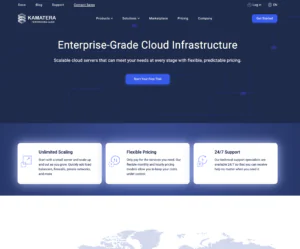
Kamatera is the best fully managed host provider on the market. This Israeli hosting provider offers fully managed, managed, and unmanaged VPS hosting, which can easily run Django apps. It is also very easy to upscale or downscale your Django server whenever you want from the user dashboard or by contacting support.
If you are opting for the fully managed Django VPS server of Kamatera, the team will help you configure your Django apps on the server, provide security upgrades, and manage the server for you. If you already have a team to manage the server, you can opt for the managed or unmanaged server for your Django app.
Rating Based on Expert Review:
- Overall Score: 4.9
- Features: 5
- Reliability: 5
- Support: 4.9
- Pricing: 4.9
- Developer Friendly: 4.9
Detailed Analysis:
- Features: Kamatera offers offsite back-ups, Free SSL certificates, Blazing fast SSD storage, and centralized control of the server.
- Reliability: Kamatera has 13 data centers worldwide, reducing the chance of losing data. It also offers a 99.95% uptime guarantee making it a very reliable host for your Django apps.
- Support: Telephone, Live chat, and email support are available in case any issue arises. Kamatera has a reputation for having one of the best technical and customer support teams.
- Pricing: Kamatera offers flexible pricing for its servers. You can pay hourly or monthly, which is great if you want to test your Django app first and see if you are satisfied with it. You can always opt-out if you do not like their service as you only have to pay as much as you used their services by the hour. There is also a 30-day free trial. However, it does need your card information.
- Some of the pricing plans offered by Kamatera for your Django hosting are:
- $0.005/hr or $4/month Unmanaged
- [1024 MB RAM / 20 GB SSD / 1vCPU / 1000 GB per Month Bandwidth]
- $0.129/hr or $94/month Fully Managed
- [8192 MB RAM / 100 GB SSD / 4vCPU / 1000 GB per Month Bandwidth]
- $0.184/hr or $134/month
- [10240 MB RAM / 200 GB SSD / 8vCPU / 1000 GB per Month Bandwidth]
- Developer Friendly: Kamatera is a service focused on developers. It provides hourly pricing, which is attractive for developers in terms of testing their Django apps on Live servers. It also offers a friendly control panel and centralized account management.
Pros & Cons
- Pay-per-hour pricing.
- You can choose from 13 data centers.
- Great customer service.
- Does not offer shared hosting for Django.
- A bit complicated for intermediate level users.


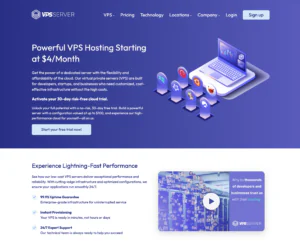
VPSServer.com positions its Django hosting as a VPS-first solution for developers who want full control over their Python stack, from server-level configuration to deployment workflows. Instead of a “managed Django” experience, it’s best suited to teams comfortable provisioning Linux instances, tuning application servers, and optimizing databases. For startups, agencies, and in-house dev teams running Django in production, the platform offers flexible compute profiles that can scale as traffic grows, while keeping the environment predictable for CI/CD and staging setups.
Rating Overview
- Overall Score: 4.4
- Performance: 4.5
- Support: 4.2
- Security: 4.4
- Pricing: 4.3
- Ease of Use: 4.1
Detailed Analysis
Performance: VPSServer.com delivers solid VPS resources for Django deployments, especially when paired with Nginx and Gunicorn/Uvicorn configurations. You can choose plans that prioritize CPU or RAM depending on your workload. Performance is highly dependent on how well you configure caching, workers, and database tuning.
Support: Support is generally helpful for infrastructure and VPS-related issues, but it’s not a hands-on Django ops team. You’ll likely handle framework-level troubleshooting, dependencies, and deployment errors yourself. This is a better fit for developers than for non-technical site owners.
Security: The VPS model supports strong security practices like custom firewall rules, SSH hardening, and isolated environments per app. You’re responsible for patching, securing the OS, and managing secrets properly. With good maintenance habits, it can be a secure base for production Django services.
Pricing: Pricing is competitive for VPS hosting and can be cost-effective compared to fully managed Django platforms. However, you should factor in your own time for setup and ongoing maintenance. Higher-tier plans can add up if you overprovision resources.
Ease of Use: The control you gain comes with a steeper setup curve, especially if you’re new to server administration. Django requires configuration for databases, static files, SSL, and process management. Once templated, deployments can be streamlined, but the initial lift is higher than shared hosting.
Pros and Cons
- Good VPS performance headroom for Django scaling
- Full control over Python runtime and server stack
- Flexible plans suitable for staging and production
- Works well with CI/CD and container-based workflows
- Suitable for multi-app deployments on one VPS
- Not beginner-friendly compared to managed Django hosting
- You handle OS updates, security patching, and tuning
- Framework-level support is limited
-
Best Value for Money 2026
-
Editor's Choice 2026
-
Most Recommened PHP Hosting 2026
-
Top 5 UK Web Hosting 2026
-
Top 5 Europe Web Hosting 2026

Ionos by 1&1 offers a robust environment for hosting Django applications, emphasizing high performance and strong security measures like DDoS protection. Unlike some specialized hosts, it doesn’t provide a one-click Django setup; developers must configure the framework and environment themselves (especially on shared plans) or opt for an Ionos VPS for full control. In return, Ionos delivers great value – its plans are budget-friendly yet feature-rich. This makes it well-suited for developers or small businesses needing a secure Django host on a budget, as long as they have the technical know-how to manage the setup.
Rating Based on Expert Review:
- Overall Score: 4.3
- Performance: 4.5
- Support: 4.2
- Security: 4.6
- Pricing: 4.7
- Ease of Use: 4.0
Detailed Analysis:
- Performance: Ionos’s hosting stack is built with speedy SSD storage and solid infrastructure. Django sites run quickly and remain responsive under load thanks to fast I/O and scalable resources, allowing you to maintain performance as your project grows.
- Support: Technical support is available 24/7. The support team is responsive and helpful, though for deep Django-specific issues you may need to rely on your own know-how.
- Security: Ionos includes robust security on all plans. Every hosting package comes with a free SSL certificate and built-in DDoS protection to safeguard your Django app plus automatic daily backups of your webspace for data safety
- Pricing: Pricing is a standout attribute. Shared plans start at very low introductory rates, making entry-level hosting extremely affordable, while higher-tier VPS options provide ample resources for the price. Costs scale predictably with usage, so you know what you’re paying for as your project grows.
Pros and Cons:
Strong security features (daily backups, free SSL, DDoS protection)
Fast SSD storage for quick load times
24/7 customer support availability
Budget-friendly plans with easy scalability
Steeper learning curve for newcomers
No out-of-the-box Django environment (manual setup required)
-
Best Web Hosting 2026
-
Top 5 Europe Web Hosting 2026
-
Top 5 Germany Web Hosting 2026
-
Top 10 Reseller Hosting 2026
-
Top 5 USA Web Hosting 2025

Hostarmada offers reliable Django hosting solutions designed to support developers looking to build scalable and robust web applications. With a focus on performance and security, Hostarmada provides a solid foundation for your Django projects.
Rating Based on Expert Review:
- Overall Score: 4.6
- Features: 4.7
- Reliability: 4.5
- User-Friendly: 4.6
- Support: 4.8
- Pricing: 4.5
Detailed Analysis:
Features: Hostarmada’s Django hosting comes with a variety of features, including automatic backups, a user-friendly control panel, and support for multiple databases. The hosting environment is optimized for running Django applications efficiently, with pre-installed libraries and frameworks.
Reliability: The hosting infrastructure is built for high availability, ensuring that your Django applications remain accessible at all times. With robust security measures in place, users can trust that their data is protected against potential threats.
User-Friendly: Setting up a Django application with Hostarmada is a straightforward process, aided by their intuitive control panel. This makes it easy for developers of all skill levels to manage their hosting environment and deploy applications seamlessly.
Support: Hostarmada prides itself on providing excellent customer support, available 24/7 to assist with any issues related to Django hosting. Their knowledgeable support team is well-equipped to help troubleshoot problems and provide guidance.
Pricing: The pricing for Hostarmada’s Django hosting is competitive, with various plans that cater to different budgets. This flexibility ensures that users can find a hosting solution that fits their financial needs without compromising on quality.
Pros and Cons:
- Optimized features for running Django applications
- High reliability with robust security measures
- 24/7 customer support from experienced professionals
- Some advanced features may come at a higher cost
- Limited server locations compared to larger providers
-
Best Reseller Hosting Provider 2026
-
Top 5 Australia Web Hosting 2026
-
Top 5 UK Web Hosting 2026
-
Top 10 Windows Hosting 2026
-
Top 10 VPS Hosting 2026

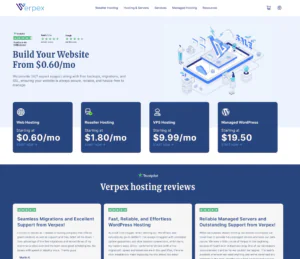
Verpex’s Django Hosting is best suited to developers and small teams that want a practical Python-friendly environment for deploying Django apps without overcomplicating the stack. Its positioning around “Python hosting” makes it a sensible fit for typical Django use cases—content sites, dashboards, lightweight SaaS apps, and API backends—where you care about stable performance, SSL, and a support team that understands common deployment needs. Verpex also offers VPS options (managed or unmanaged), which can be a strong path if your Django project needs more predictable resources than shared-style plans. Overall, it’s a balanced choice for Django deployments when you want flexibility to scale and a hosting provider that emphasizes support and migration help.
Rating Overview
- Overall Score: 4.6
- Performance: 4.6
- Support: 4.7
- Security: 4.6
- Pricing: 4.4
- Ease of Use: 4.4
Detailed Analysis
Performance: Verpex highlights hosting optimized for Python projects, which aligns well with typical Django workloads and deployment patterns.Its VPS lineup also references NVMe-based storage, which can benefit database-heavy apps and static/media handling when configured well.
For high-traffic apps, you’ll still want disciplined caching, proper gunicorn/uvicorn sizing, and a database plan that won’t become the bottleneck.
Support: Verpex emphasizes 24/7 support across its Python and VPS offerings, which is helpful when you’re troubleshooting deployments, SSL, or server updates. This tends to be most valuable for infrastructure and hosting-side issues rather than application-level debugging.If your Django app needs query optimization or profiling, you should expect to handle that within your dev team.
Security: Free SSL and “advanced security” positioning provide a good baseline for Django sites that need encrypted traffic and safer migrations. On managed VPS, Verpex notes management and automatic updates, which can reduce patching gaps if you prefer less hands-on maintenance.
You should still enforce firewalling, secrets management, and least-privilege database access as part of your deployment checklist.
Pricing: Verpex advertises aggressive first-month promotional pricing on both Python hosting and VPS, which can lower the barrier to testing a Django deployment. Long-term value depends on renewals and whether you outgrow entry tiers.It’s best when you right-size early and avoid paying for resources you won’t use.
Ease of Use: Verpex describes a “fully managed” approach for its hosting stack, which can reduce operational overhead compared to fully DIY infrastructure. Django deployments still require developer familiarity with WSGI/ASGI, environment variables, and process management.
If you’re comfortable with that workflow, it’s a clean path from initial deploy to scalable VPS growth.
Pros and Cons
- Python-focused hosting positioning fits Django deployments well
- VPS options with managed or unmanaged flexibility
- NVMe-based VPS storage can benefit app responsiveness
- Free SSL and migration support reduce launch friction
- 24/7 support helps with hosting-side issues
- Django setup is not fully “one-click” and needs developer involvement
- App-level performance tuning remains your responsibility
- Scaling may require moving from entry plans to VPS sooner than expected
-
Best Linux Hosting Provider 2026
-
Top 5 USA Web Hosting 2026
-
Top 10 Reseller Hosting 2026
-
Top 10 Windows Hosting 2026
-
Great Support 2026

InterServer’s Django Hosting is best framed as running Django on a flexible Cloud VPS rather than a fully managed, one-click Django platform. That approach suits developers, startups, and small teams who want control over the stack (Python versioning, virtual environments, Nginx/Gunicorn, background workers) while keeping costs predictable. InterServer’s VPS offering highlights SSD-backed infrastructure and a 99.9% uptime guarantee, which are important baselines for Django apps that need consistent I/O and steady availability. InterServer also publishes practical setup guides, including a Django installation walkthrough and a cPanel “Setup Python App” guide that can help with Python app deployment workflows. Overall, it’s a good-value choice for technical users who don’t mind owning parts of deployment and maintenance.
Rating Overview
- Overall Score: 4.4
- Performance: 4.4
- Support: 4.4
- Security: 4.5
- Pricing: 4.6
- Ease of Use: 4.2
Detailed Analysis
Performance: InterServer’s Cloud VPS is positioned around high-performance SSD storage, which helps Django apps with database-backed pages and static/media operations. Scaling is straightforward by adding resources as traffic grows, which fits Django projects that start small and ramp over time. Performance still depends heavily on your app setup (caching, DB tuning, and proper WSGI/ASGI workers).
Support: InterServer promotes 24/7 support, which is helpful when you hit urgent infrastructure issues or need guidance on server-side configuration. Support is generally strongest for hosting/VPS topics (networking, service restarts, OS-level problems) rather than Django code debugging. If you’re comfortable executing steps over SSH, support interactions tend to be efficient.
Security: VPS hosting gives you the freedom to harden your Django stack properly (firewall rules, SSH security, dependency patching, and secrets management). InterServer’s SLA and uptime/network commitments support reliable operations, but application security remains your responsibility. Backups and restore testing should be part of your standard release process.
Pricing: Pricing is a standout for developer teams that want a low-cost VPS to host Django without platform premiums. VPS-style billing makes it easier to right-size resources instead of paying for bundled “managed app” layers. Long-term value is best when you plan capacity upgrades before performance becomes a problem.
Ease of Use: This is not a plug-and-play Django host—expect to configure Python environments, a web server, and process management. InterServer’s tutorials can reduce friction, especially for first-time deployments. If you want maximum simplicity, you may prefer fully managed app platforms, but developers will like the control.
Pros and Cons
Budget-friendly Cloud VPS suitable for Django deployments
SSD-backed infrastructure and 99.9% uptime guarantee
24/7 support availability for server-side issues
Helpful knowledge base for Django/Python setup
Easy to scale resources as apps grow
Django deployment and tuning are largely self-managed
Requires SSH and server administration comfort
App security and backups depend on your configuration
-
Top 25 Offshore Hosting 2026

Hosting.com’s Django Hosting is geared toward developers who want a dependable environment for deploying Django apps with fewer compromises on speed and reliability. The provider explicitly positions its Django offering as developer-friendly and backs it with a 99.9% uptime commitment and a money-back guarantee, which helps reduce risk for new projects and migrations.For many Django users, the practical choice is between shared-style hosting (fine for smaller apps) and VPS hosting (better for production workloads and scaling). Hosting.com supports both directions, with performance-focused options that can suit everything from portfolio apps to API backends—so long as you’re comfortable owning at least part of the deployment process.
Rating Overview
- Overall Score: 4.6
- Performance: 4.7
- Support: 4.6
- Security: 4.5
- Pricing: 4.4
- Ease of Use: 4.5
Detailed Analysis
Performance: Hosting.com emphasizes Turbo-grade optimizations like LiteSpeed and NVMe-focused speed boosts, which can benefit Django apps when your stack is tuned correctly. You’ll still want good app practices (caching, efficient queries, static/media handling) because Django performance is as much configuration as hosting. It’s a strong fit for developers who want headroom beyond basic shared hosting.
Support: Support is positioned as a strength for Python users, with assistance available through common channels when you hit deployment or environment issues. Expect the most value on hosting-side troubleshooting (server behavior, configuration guidance) rather than debugging your Django code. Documentation also helps bridge common setup gaps for DIY deployments.
Security: Django hosting benefits from layered security, and Hosting.com includes baseline protections like free SSL across plans in its core hosting lineup. On VPS, security depends heavily on how you harden the server, manage secrets, and restrict access. You should also verify backup/restore routines to ensure recoverability.
Pricing: Pricing can be attractive at entry levels, but the best value is achieved when you right-size resources and avoid unnecessary add-ons. Turbo-style performance features may cost more, but they can be worth it for production apps. For larger Django workloads, VPS pricing often makes the scaling path clearer than shared tiers.
Ease of Use: Django isn’t “one-click” everywhere, but Hosting.com provides step-by-step guidance for deploying Django on shared hosting via cPanel’s Python App tooling. Technical users will find the workflow manageable with SSH and basic process management. Beginners may need extra time to learn deployment basics before feeling comfortable.
Pros and Cons
Turbo performance options with LiteSpeed and speed-focused features
Clear uptime commitment and money-back guarantee for lower-risk trials
Helpful Django setup documentation for shared and server deployments
Suitable upgrade path from starter hosting to VPS resources
Strong fit for developer-led Django projects
Django deployment and tuning still require hands-on configuration
Best performance may require higher-tier plans
VPS security and backups depend on your setup discipline
Is VPS better for Django than Shared Hosting?
Yes, VPS is better for Django than Shared Hosting. It gives you dedicated resources, full control over the server, and supports essential tools like Gunicorn, Nginx, and virtual environments. Shared Hosting is often limited, slower, and not well-suited for Python-based frameworks like Django.
Common Limitations of Django Hosting Plans
- Shared Hosting Restrictions: Some shared hosts support Python but lack WSGI, SSH, or pip support.
- Limited Memory and CPU: Entry-level plans may not handle traffic spikes or background tasks.
- No Built-in Scalability: Some plans lack vertical or horizontal scaling, limiting app growth.
- Manual Environment Setup: You may have to manually configure WSGI, venvs, and static file handling.
- Outdated Python Versions: Some hosts don’t provide timely updates for Python or Django versions.
Use Cases: Who Should Choose Django Hosting?
- Web Developers Building Custom Applications: Django’s MVT framework and built-in admin make it ideal for quickly launching data-driven projects.
- Agencies Offering Python-Based Web Solutions: Django hosting supports scalable client apps with reusable components and multi-app structures.
- Startups Releasing MVPs: Django enables rapid prototyping with secure backend logic—perfect for MVPs and lean product validation.
- Data Science and Analytics Teams: Hosting Django apps with integrated APIs and data visualization tools is useful for dashboards and internal tools.
- Education Platforms and CMS Projects: Django’s extensibility and admin panel support LMS, CMS, and other content-heavy use cases.
Why Trust Our Recommendations
At HostAdvice, our Django hosting recommendations are built on hands-on testing with real Django apps. Our team of developers installs and configures Django projects on each host, evaluating setup time, performance, scalability, and support quality.
We also analyze the available documentation, assess environment flexibility, and check how well hosts support Python workflows. Each listing is vetted for actual developer needs—not just marketing promises.
How We Test and Rank
Our testing process involves deploying live Django apps across shared, VPS, and cloud hosting providers to simulate real-world use. We evaluate the ease of deployment, including whether Django can be installed quickly and static/media files are easily configured. Performance benchmarks are conducted using tools like GTmetrix and Loader.io to measure page speed and response times.
We also test resource availability—looking at memory limits, CPU performance, and whether the host supports background tasks. Developer features such as SSH access, Git integration, pip package management, and WSGI/ASGI compatibility are thoroughly reviewed. Finally, we test customer support by submitting Django-specific queries and assessing the clarity, speed, and usefulness of the responses.
Best Django Hosting: Final Recommendations
If you’re building serious Django applications, prioritize hosts that offer full control, WSGI/ASGI support, and scalable server environments. Cloud and VPS options provide the most flexibility, especially if you’re deploying APIs, SaaS tools, or web portals.
Beginners may benefit from Python-specific shared plans, but experienced developers should look toward VPS or container-based environments for the best results. Whether you’re launching a side project or scaling a business, reliable Django hosting will help your code thrive.